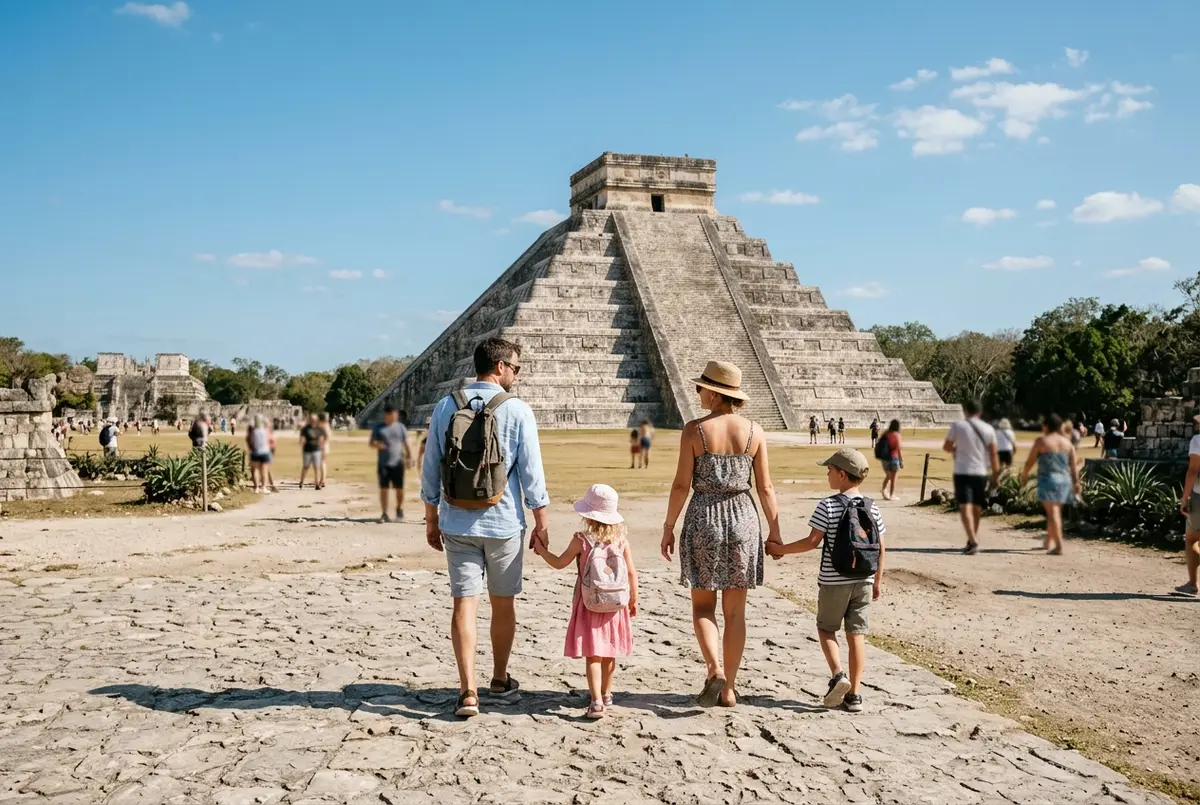
Chichen itza with kids is a trip I would absolutely recommend, but I would plan it differently than a typical adults-only day, since heat and distance matter far more here than the ruins’ reputation as a historical site. The good news first: children under 12 generally enter free, and most of the full-day tours welcome families without hesitation. The real work is managing sun exposure, walking distance and the mid-day crush of tour buses, not deciding whether the destination itself is appropriate for a child. If you want to see which of Chichen Itza’s own tours already build in family-friendly pacing or a child discount, check which of the eight Chichen Itza tours list a child rate or a gentler schedule before you book one.
Is Chichen Itza actually a good destination for children?
Yes, for most ages. Chichen itza is an open, mostly flat archaeological site with wide paved paths, which makes it easier to navigate with children than many ruin sites built on uneven jungle terrain. I would say the site itself is genuinely engaging for kids old enough to be curious about pyramids and ancient history, roughly six and up, while toddlers and infants can still come along comfortably with the right gear and timing. The site is not inherently difficult for a family, it is the heat and distance that take real planning.
Do children get a discount on the Chichen Itza entrance fee?
Yes, and this is one of the clearest, best planning facts for a family trip here. Children under 12 generally enter free, which meaningfully changes the math for a family of four or five compared to the roughly 44 to 47 USD per-adult entrance fee charged to foreign visitors. I would bring some form of ID for each child just in case it is requested at the gate, even though enforcement for young children tends to be straightforward. My full Chichen Itza tickets and prices guide covers the complete fee structure, including the separate discounted rate for Mexican residents and students, if you want the full picture before you travel.
How much walking is actually involved with kids in tow?
More than most first-time visitors expect. The main plaza alone covers a significant amount of open ground, and a thorough visit covering El Castillo, the Great Ball Court and the Sacred Cenote easily adds up to a couple of miles of walking on foot. I would plan for frequent short breaks rather than one long continuous walk, and I would set expectations with older kids ahead of time that this is a big outdoor space, not a quick ten-minute stop. For younger children who tire quickly, a baby carrier tends to work far better than a stroller once you are actually inside the site.
Can I bring a stroller into Chichen Itza?
Technically yes, but I would think twice before relying on one as your main way of moving a child around. The paths are paved but uneven in places, and the site gets crowded enough around the main structures that maneuvering a stroller through foot traffic becomes genuinely frustrating. I would bring a lightweight, collapsible stroller for stretches of open path and switch to carrying for the busier areas, rather than expecting to push one comfortably through the entire visit.
How do I manage the heat with young kids?
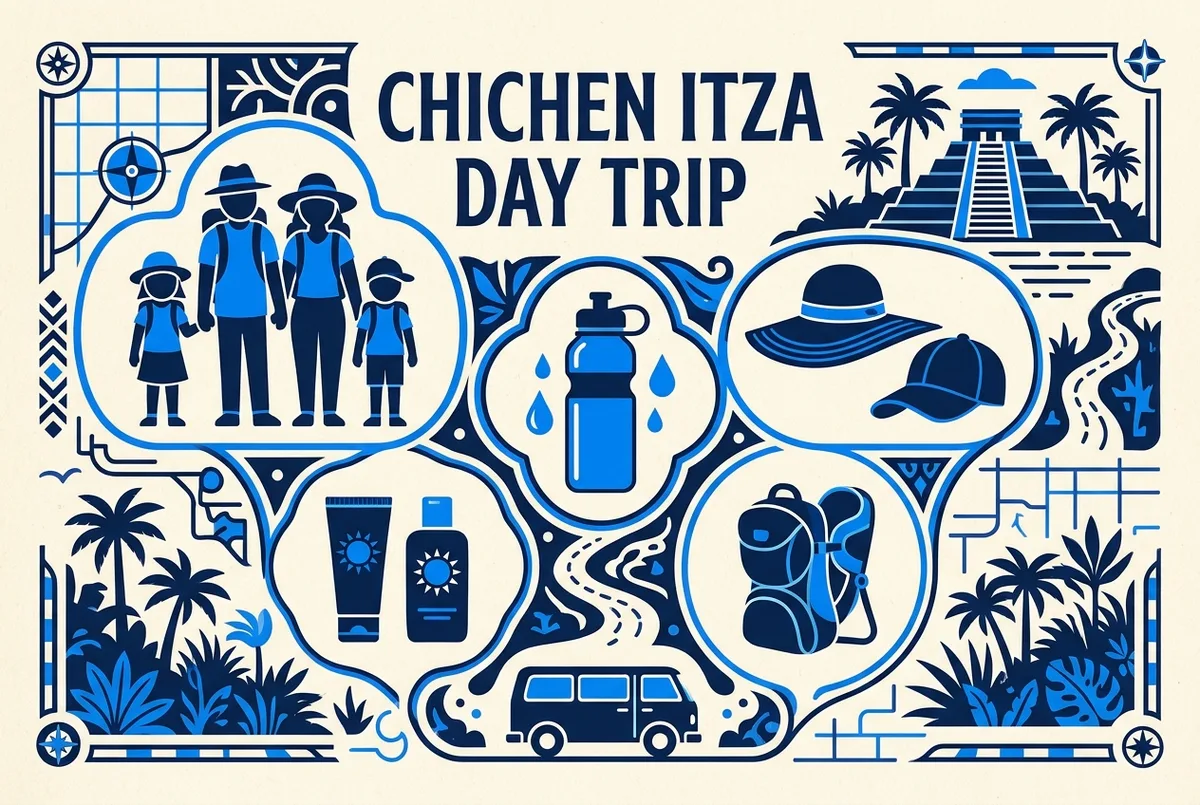
Heat is the single biggest challenge on this trip, bigger than the walking distance itself. I would schedule your visit for the earliest time slot available, since temperatures climb fast once the sun is fully up, and the site offers very little natural shade across most of the open plaza. Pack more water than you think you need, dress kids in light, breathable clothing and a wide-brimmed hat, and apply sunscreen before you arrive rather than relying on finding shade to reapply it comfortably later in the visit.
Are there bathrooms and shade breaks available on site?
Yes, restroom facilities exist near the main visitor entrance, though I would not expect them to be conveniently located every few hundred meters across the site. I would plan your route with that in mind, using a bathroom break before setting out across the plaza rather than assuming you will pass one along the way. Shade is limited to a handful of spots near the tree line and some of the smaller structures, so I would treat any shaded bench you pass as worth a short pause, even if you were not planning to stop there.
Does a full-day tour work well for families, or is that too long?
It depends on the ages involved. For school-age kids and up, I think a full-day tour that adds a cenote swim and a stop in Valladolid works genuinely well, since the cenote gives children something physically rewarding after a few hours of walking in the heat, and it breaks up what would otherwise be a long day of just looking at ruins. For toddlers or infants, I would lean toward a shorter, more flexible visit instead, since a 12-hour day with fixed pickup and drop-off times leaves little room to adjust if a young child needs an early nap or an unplanned break.
Should I book a guide for a family visit, or go self-guided?
I would book a guide either way, honestly, even with kids along. A good guide keeps the pace reasonable and can frame the history in a way that holds a child’s attention far better than reading a plaque on your own, and most certified guides are used to adjusting their pace for families. If you already have your own transportation sorted, the on-site guided tour is a flexible, lower-cost way to add that context without committing to a full bus tour schedule built around adults.
What should I pack specifically for a family visit?
Beyond the usual sun protection, I would pack snacks that do not melt in the heat, a change of clothes if your day includes a cenote swim, a basic first aid kit for the inevitable scraped knee, and entertainment for any wait time during pickup or transfers. My broader what to wear and pack guide covers the general packing list for this trip, and I would treat the family-specific additions above as extras on top of that baseline rather than a replacement for it.
Is the cenote swim safe and appropriate for kids?
Generally yes, with sensible precautions. A life vest is mandatory for swimming at most of the cenotes paired with Chichen Itza tours, and I would make sure a properly fitted child-size vest is available before letting a young child in the water, since adult-sized vests do not fit safely. I would also keep a close eye on footing around the cenote platforms, since the stone surfaces get slippery when wet. For nervous swimmers or very young kids, staying in the shallower, calmer sections rather than jumping from a platform is the easier, lower-stress option.
Does traveling with an infant change anything about the tour itself?
Yes, in one specific and important way. On the full-day bus tours, infants must travel in an approved child seat that the tour operator does not supply, so you need to bring your own if you are booking a bus-based tour with a baby. I would confirm this directly with whichever tour you book, since it is easy to overlook until you are standing at the pickup point without one. Beyond that, an infant changes the pacing of your day more than the logistics of the tour itself, since naps and feeding breaks matter more than anything happening at the ruins.
How do I keep kids engaged once the novelty of the pyramid wears off?
I would lean on the guide rather than trying to narrate everything yourself, since a good certified guide usually has a handful of stories about Maya mythology, ball game rules and astronomy that genuinely hold a child’s attention better than a parent reading facts off a phone. Giving an older child a specific thing to look for, like counting the steps on El Castillo or spotting the serpent carvings, tends to work better than asking them to simply admire the architecture in the abstract. For younger kids who lose interest faster, I would treat the cenote swim as the reward waiting at the end of the ruins portion, and say so out loud early in the day.
How do vendors and souvenir stalls affect a family visit?
Chichen Itza’s main walking path is lined with vendor stalls selling textiles, carvings and souvenirs, and I would set expectations with kids before you arrive, since the volume of stalls and occasional calls to come look can catch children off guard. I would decide on a souvenir budget ahead of time rather than negotiating it in the moment, since kids tend to ask for something at nearly every stall if given the chance. None of this is unsafe or aggressive in my experience, it is simply a lot of stimulation layered on top of an already long, hot walk.
Are there other family-friendly stops worth adding to the day?
Yes, and I think they often matter more to kids than the ruins themselves. A cenote swim is the clearest win, giving children a genuine physical reward after a few hours of walking, and my cenotes near Chichen Itza roundup covers the swimmable options most families combine with this trip. A stop in Valladolid adds food options a picky eater is more likely to accept than a buffet lunch built for adults, plus a change of scenery that breaks up the day. I would build at least one of these into a family itinerary rather than treating the ruins as the entire day.
Does traveling with teenagers change the planning at all?
Less than you might expect, honestly. Most teenagers handle the heat and walking distance about as well as an adult does, and I would focus more on keeping them genuinely interested than on managing physical limits. I think teens tend to respond well to the equinox story at El Castillo and the ball game rules at the Great Ball Court, since both have a bit of drama to them that a straightforward history lecture lacks. If climbing a real pyramid matters to a teen disappointed that Chichen Itza itself bans it, pairing the day with Ek Balam instead, where climbing is still allowed, is worth considering for a later trip.
What time slot actually works best for a family’s energy levels?
I would book the earliest departure or entry time available without exception, and not just for the heat. Kids tend to have their best focus and patience in the first few hours of the day, well before nap-time crankiness or afternoon fatigue sets in, so an early start stacks the whole day in your favor rather than fighting against both heat and tired kids at the same time. If your tour offers a choice between an early and a mid-morning departure, I would take the early one even if it means a genuinely unpleasant wake-up time, since the trade-off is almost always worth it once you are actually inside the site.
Is it better to book a private tour instead of a shared group tour with kids?
I would lean toward a private option if your budget allows it, mainly for flexibility rather than comfort. A shared group tour runs on a fixed schedule that does not pause for a tired toddler or an unplanned bathroom stop, while a private tour, even a modestly priced one, gives you room to slow down, skip ahead, or cut a stop short without feeling like you are holding up a bus full of other travelers. For families with calm, patient kids who do well on a schedule, a shared tour works perfectly fine and costs considerably less, so I would not treat this as a strict requirement, just a genuine trade-off worth weighing.
My honest recommendation for families
If your kids are school-age or older, I would book the standard full-day tour with the cenote stop, since the swim genuinely makes the day better for a child and the pacing works for most families without much adjustment. For families with toddlers or infants, I would consider the shorter on-site guided tour paired with your own transportation instead, since it gives you far more control over timing and lets you leave the moment a child has had enough. Either way, I would treat an early start as the single most valuable thing you can do for this trip, since avoiding the worst of the midday heat and crowds matters more to a family’s experience than almost any other decision you will make. For general trip planning beyond the family-specific concerns here, my Chichen Itza travel tips guide and my Chichen Itza tickets and prices page are the two I would read next.
FAQ: Visiting Chichen Itza with kids
Do children need a ticket to enter Chichen Itza?
Children under 12 generally enter free and typically do not need a separate ticket, though I would carry some form of ID for each child in case it is requested at the gate.
Is Chichen Itza too hot for young kids?
It can be, especially from late morning onward. I would schedule an early visit, bring more water than you think you need, and plan frequent shade breaks to manage the heat with young children.
Can I bring a stroller to Chichen Itza?
Yes, though a lightweight, collapsible one works better than a bulky stroller, since the paths get crowded and uneven in places. Many families switch to a baby carrier for the busiest stretches.
Is the cenote swim stop safe for kids on a Chichen Itza tour?
Generally yes, as long as a properly fitted child-size life vest is available and you supervise footing on the wet stone platforms around the cenote.
What age is best for a child’s first visit to Chichen Itza?
Roughly six and up tends to get the most engagement and curiosity from the history itself, though younger children and infants can still come along comfortably with the right gear and timing.
Does an infant need a special seat on the bus tours?
Yes, infants must travel in an approved child seat on the full-day bus tours, and the operator does not supply one, so bring your own if you are booking that style of tour with a baby.
chichen itza tours →